


Speech at II International Congress of Young Scientists of Kazakhstan organized by National Academy of Sciences of Kazakhstan
Yesbol Sartayev, PhD, Assistant professor of CGR
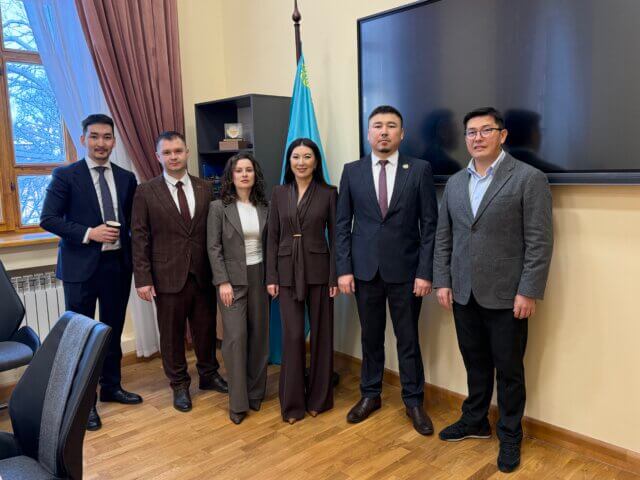
On December 11–12, 2025, I had the honor of participating in the II International Congress of Young Scientists of Kazakhstan, held in Almaty. The Congress brought together policymakers, senior scholars, and emerging researchers from Kazakhstan and abroad, providing a valuable platform for interdisciplinary dialogue on the future, challenges, and advancement of science. I delivered a keynote address at the plenary session of the International Congress and presented my research at the Life and Health Sciences panel held at Asfendiyarov Kazakh National Medical University.
In my keynote speech, which was aimed at encouraging young scientists, I highlighted the positive developments and ongoing transformations within Kazakhstan’s scientific landscape. Titled “Kazakhstan’s Science: A View from Abroad and My Current Research” the talk reflected on my personal academic trajectory. Rather than presenting this journey as a narrative of individual success, I framed it as an illustration of how structural conditions, international mobility, and institutional support collectively shape scientific careers.
My experience across multiple universities and countries highlighted a central message for young scholars: scientific careers are rarely linear. Periods of uncertainty, rejection, and financial hardship are not anomalies, but formative stages that cultivate resilience and intellectual maturity. In this sense, personal biography becomes inseparable from academic practice—an idea that resonated strongly with the Congress’s emphasis on trust and long-term transformation.
A distinctive element of my keynote address was its critical reflection on transformations within Kazakhstan’s academic landscape and the challenges they entail. As in many post-Soviet nations, Kazakhstan’s scientific prestige has undergone a complex transition. While standards for PhD training and scholarly publication have risen sharply, working conditions and institutional support have not kept pace. This imbalance risks accelerating brain drain, as highly trained scholars become increasingly visible and competitive within global academic markets.
In both, my plenary speech and panel presentation, I introduced my core research field: the long-term health and social consequences of nuclear power plant accidents, with a comparative focus on Chernobyl and Fukushima. A key scientific insight drawn from decades of post-Chernobyl research is that internal radiation exposure can persist long after external radiation levels decline, generating sustained public anxiety even when measurable health effects remain limited. Although low-dose internal exposure has not been conclusively linked to severe long-term health outcomes, its psychological and social impacts are significant and have been recognized by international organizations such as the WHO and the IAEA. In contrast, the Fukushima experience demonstrated how early warning systems, strict food monitoring, and effective risk communication can substantially reduce internal exposure and mitigate public concern. This comparative perspective underscored a broader lesson: effective risk governance is as critical as the magnitude of risk itself.
During the Life and Health Sciences panel, I emphasized that similar mechanisms of internal radiation exposure likely operated in Kazakhstan’s Semey region, which was affected by decades of nuclear weapons testing. However, limitations such as the absence of comprehensive medical registries, long-term epidemiological follow-up, and consistent data collection reflect broader challenges in data governance, institutional continuity, and research infrastructure—issues that intersect directly with the core concerns of global risk studies. Addressing these challenges requires sustained international collaboration and long-term investment in scientific systems.
My participation in the International Congress enabled the establishment of strong academic connections and networks with leading scholars and institutions in the Kazakhstan. In addition, several potential collaborative research initiatives were discussed, openning new opportunities to further advance research on global radiation-related risks. Building on this engagement, the CGR at Nagasaki University will continue to contribute to international dialogue on global risks, particularly those related to the long-term consequences of atomic weapon use, test and nucleat disasters.