


The Research Center for Global Risk (CGR) at Nagasaki University held its annual international symposium in collaboration with J-PEAKS, featuring a wide range of discussions centered on the theme of climate change. The symposium was structured around three thematic sessions, focusing respectively on uncertainty, climate change, and emerging technological and health risks. This structure highlighted a key insight of global risk research: that risks cannot be understood in isolation, but must be analyzed as systemic and multi-layered phenomena shaped by human decision-making, institutional, political and societal responses. The event brought together researchers from diverse disciplines and research institutions in Japan, Australia, and Switzerland, reflecting the global and interdisciplinary character of the symposium. Through lively discussions and comparative perspectives, participants examined how risks transcend national borders and are deeply intertwined with political, social, economic, environmental, and technological processes. By providing a platform for international and cross-disciplinary dialogue, the symposium reaffirmed CGR’s commitment to advancing global risk research and contributing to policy-relevant discussions. The exchanges throughout the day underscored the importance of collaborative approaches in addressing global challenges and inclusive responses to risk in an increasingly unpredictable world.
Session 1. Risk and the Future — Thinking in an Age of Uncertainty
This session focused on uncertainty and the limits of prediction, a foundational issue in global risk research. In an era marked by rapid technological change, geopolitical instability, and environmental disruption, societies increasingly seek tools to anticipate future risks. However, this session emphasized that not all risks are fully predictable and explored how mathematical modeling and scenario planning can support risk preparedness, while also acknowledging their limitations. Speakers in this session emphasized that risk is not merely a technical or scientific issue, but also a political and social construct. Scientific knowledge interacts with current global developments, political decision-making, media narratives, and public trust, thereby shaping how risks are evaluated, communicated, and managed. A key takeaway was the growing importance of resilience and adaptive capacity in conditions of uncertainty; therefore, societies must learn to govern effectively under such conditions. This approach aligns with contemporary global risk theory, which highlights preparedness, institutional flexibility, and social learning as essential responses to an increasingly unpredictable world.
-
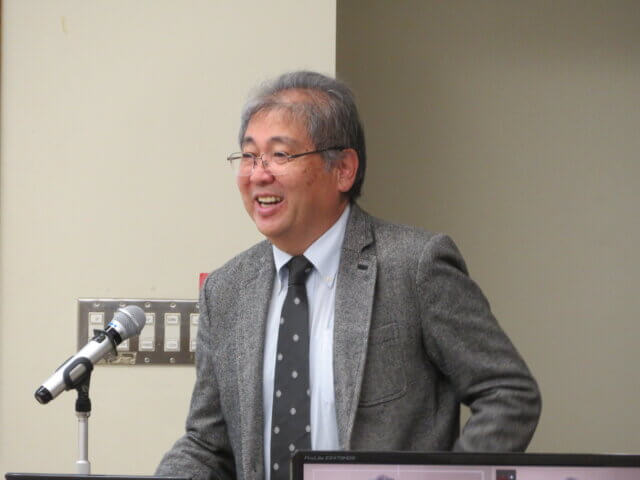
- Toru OHIRA Graduate School of Mathematics Division of Mathematics Advanced Topology, nagoya University
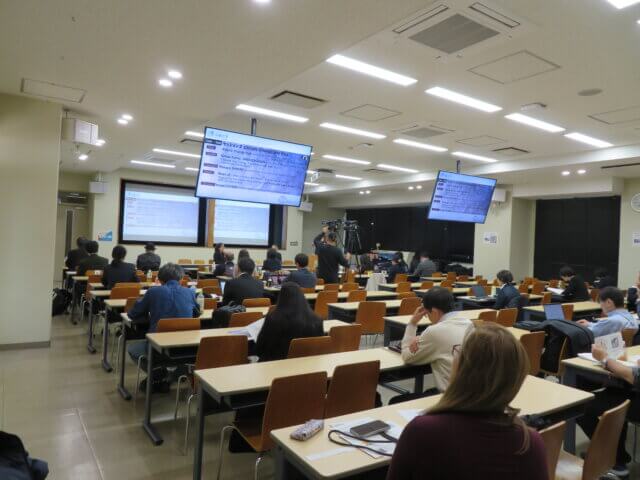
Session 2. Climate Change and Risk
The second session addressed climate change as a paradigmatic global risk—one that is slow-moving yet irreversible, global yet locally differentiated. Climate change was discussed not only as an environmental problem but as a multidimensional risk affecting energy systems, economic structures, labor markets, and social inequality. A central theme of the session was the interconnection between climate risk and the energy transition. Shifts toward low-carbon energy systems were framed not only as a critical mitigation strategy but also as a source of new risks, including economic disruption, political resistance, and uneven regional impacts. The discussion underscored that effective climate risk management requires coordinated policy approaches that integrate environmental objectives with economic and social considerations. Decisions in these interconnected domains can either amplify or reduce climate-related vulnerabilities. Overall, the session demonstrated that effective climate risk governance depends on cross-sectoral thinking and long-term policy coherence—core principles of global risk management.
-
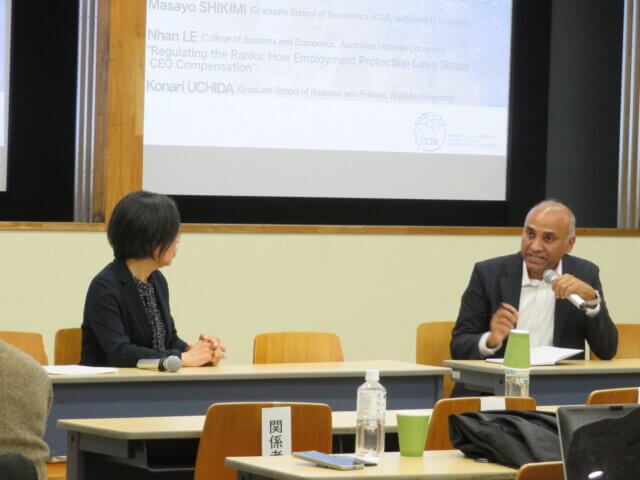
- Session 2 : Nanda Kumar JANARDHANAN and Masayo SHIKIMI
-
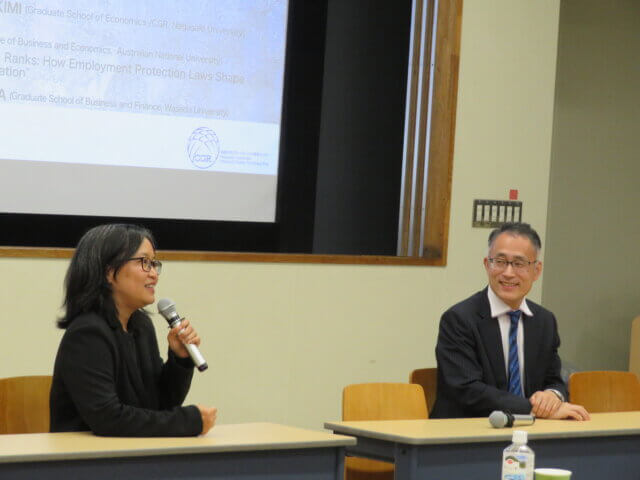
- Session 2 : Nhan LE and Konari UCHIDA
Session 3. Emerging Risks and Challenges
The final session turned to emerging risks, particularly those arising from technological innovation, environmental change, and public health. These risks are characterized by rapid development of new techonlogies, limited experience in the past, and significant uncertainty regarding long-term consequences. Discussions examined how new technologies needs to be simultaneously reduce certain risks while creating new ones, including ethical, legal, and societal challenges. The session emphasized that technological risk is not confined to technical failure but extends to governance gaps, unequal access, and unintended social consequences. Health risks associated with environmental change were also a major focus. Climate-related health impacts, such as heat stress, disease spread, and mental health effects, were discussed as critical but often underestimated dimensions of global risk. Technological, environmental, and health risks do not occur in isolation; they reinforce one another and disproportionately affect vulnerable populations. Addressing these challenges requires interdisciplinary collaboration and proactive policy design—central concerns of global risk studies.
-
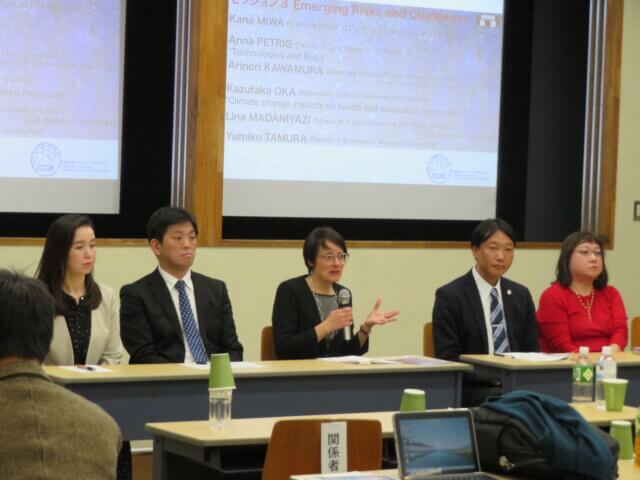
- Session 3
-
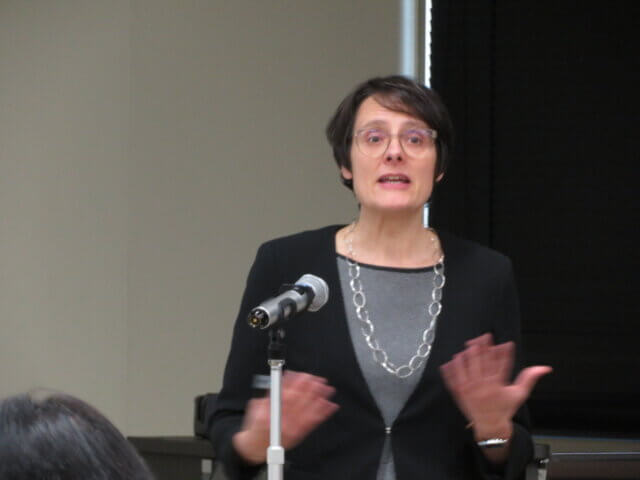
- Anna PETRIG (Faculty of Law, University of Basel)
Conclusion. Advancing Global Risk Research through Dialogue
The CGR Annual Symposium demonstrated the value of interdisciplinary dialogue in advancing global risk research. By engaging with themes of uncertainty, climate change, health, and technological risks, the symposium illustrated how global risks evolve across time scales and societal domains. It reaffirmed that global risk is not limited to extensive high-impact events but is deeply embedded in geopolitical and political dynamics, tehcnological and social processes, systems of risk governance, and long-term structural vulnerabilities. Discussions underscored that while scientific expertise is a critical component of effective global risk management, institutional coordination, sustained public engagement, and careful ethical consideration are equally essential. Through this event, CGR at Nagasaki University strengthened its role as a platform for critical reflection on how societies can better navigate the complex and uncertain risk landscape of the twenty-first century.